Social Security Journal

Social Security Journal

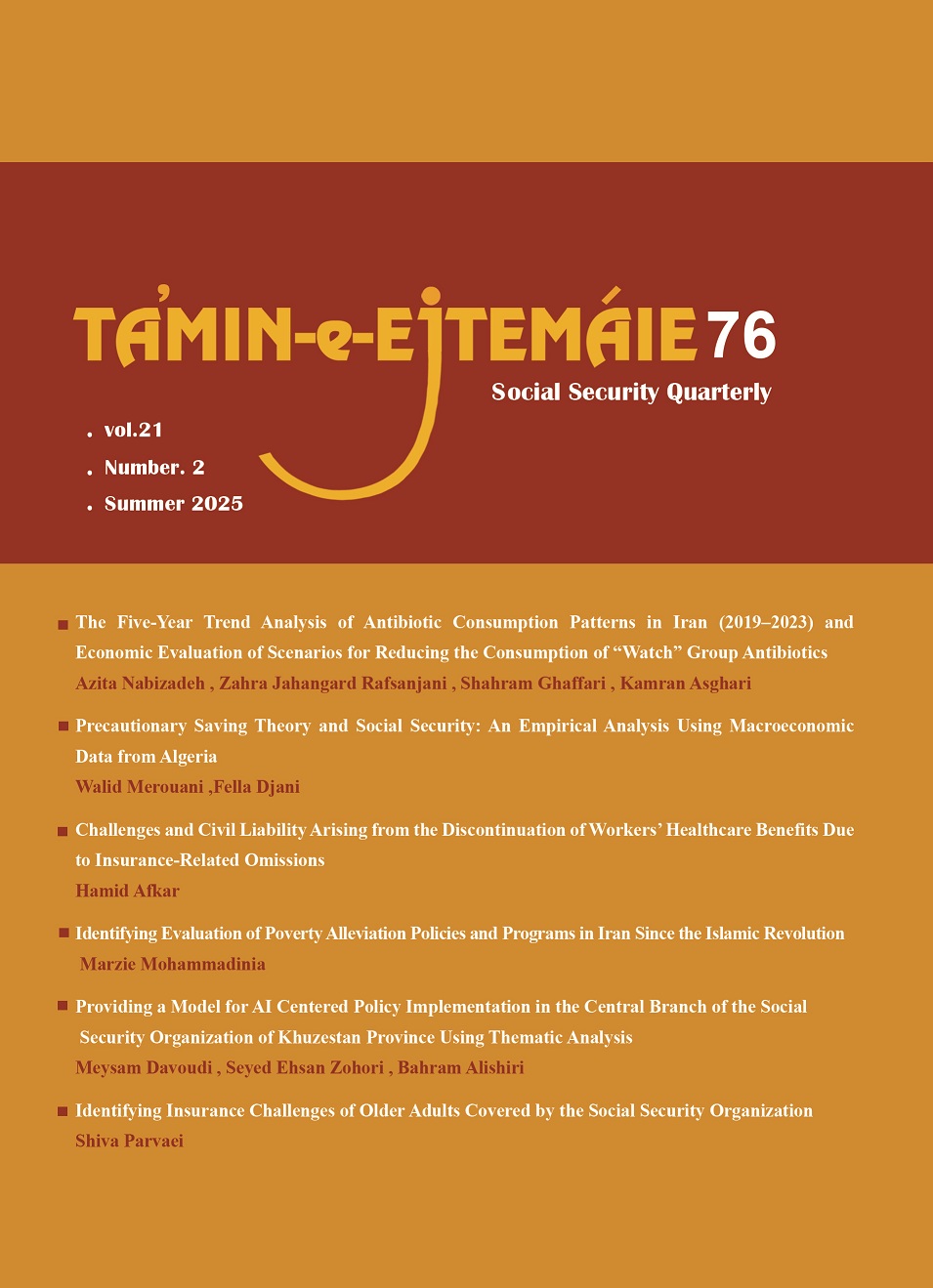
Five-Year Trend Analysis of Antibiotic Consumption Patterns in Iran (2014–2018) and Evaluation of the Economic and Policy Impacts of E-Prescribing Interventions in Reducing Watch-Group Antibiotic Use

Document Type : Original Article

Authors
Ph.D. in Pharmacoeconomics and Pharmaceutical Management, Head of the Health Technology Assessment and Managerial Economic Studies Group, Food and Drug Administration
10.22034/qjo.2026.580244.1462
Abstract
Purpose: Inappropriate antibiotic use is a primary driver of antimicrobial resistance and rising treatment costs in health systems. The classification framework introduced by the World Health Organization serves as a policy tool emphasizing increased use of Access-group antibiotics and restricted use of high-risk Watch-group antibiotics. In Iran, comprehensive evidence on consumption trends and their economic implications—particularly from the payer’s perspective—has been limited.
Method: This descriptive-analytical study with a qualitative policy-oriented approach examined the five-year trend of antibiotic consumption in Iran from 2019 to 2023 using national data. Drug utilization was analyzed based on Defined Daily Dose (DDD), Defined Daily Dose per 1,000 inhabitants per day (DID), and the WHO AWaRe classification framework. Additionally, a cross-sectional economic evaluation for the year 2023 was conducted, focusing on estimating the financial burden of Watch-group antibiotic consumption and modeling reduction scenarios.
Results: Total antibiotic consumption showed an increasing trend, reaching 65.58 DID in 2023. Watch-group antibiotics accounted for the dominant share (56%) of total consumption, indicating a considerable gap from the recommended level for Access-group antibiotics. Economic analysis revealed that the cost per DID in the Watch group was approximately twice that of the Access group, creating a substantial financial disparity. Consumption reduction scenarios for Watch antibiotics demonstrated the potential for significant cost savings, even with modest adjustments.
Conclusion:The current consumption pattern, based on the WHO classification framework, represents a threat to public health and the financial sustainability of the health system. The cost differential between Watch and Access antibiotics provides a clear economic rationale for revising consumption policies, and even relative adjustments in the consumption mix can lead to considerable financial savings. These findings can serve as a foundation for evidence-based policymaking aimed at managing antibiotic consumption and optimizing resource allocation within the national health system.
Keywords

  • Receive Date 03 April 2025
  • Revise Date 06 June 2025
  • Accept Date 18 August 2025